01 MEASURE
Accurate Lux Measurement
Tracks changes in available ambient daylight and provides the foundation for more intelligent lighting decisions.


Measure the daylight that matters—not the light produced by the luminaire. Photocell Advance™ enables concealed sensor integration, reliable daylight-based control and a cleaner fixture design.
A sensor installed inside a luminaire can be influenced by the luminaire’s own output. Photocell Advance™ is designed and calibrated to minimise that influence, so the control decision is based on changing ambient daylight rather than a misleading combined reading.
Concept diagram only. Performance depends on luminaire construction, diffuser material, sensor position and product calibration. Always refer to the latest product datasheet.
The change is more than cosmetic. Integrating compatible light sensing within the luminaire can simplify the external design while protecting the daylight-control capability the project needs.
Visible opening or external housing→cleaner, concealed integration
Extra drilling and sealing steps→fewer external integration tasks
Externally exposed sensing point→sensor positioned within a compatible luminaire
An added component on the visual line→daylight control designed into the fixture
Photocell Advance™ is not one fixed programme. It provides dependable daylight information that compatible Hytronik products can use for measurement, automatic switching, daylight priority or continuous light-level control.
Tracks changes in available ambient daylight and provides the foundation for more intelligent lighting decisions.
Turns lighting on as daylight falls and off again when sufficient natural light returns.
Keeps lighting off when the space is already bright enough—even if occupancy is detected.
Continuously adjusts artificial output as daylight changes to maintain the intended light level.
The value changes depending on who is making the decision. Photocell Advance™ connects product design, commissioning, energy performance and visual comfort in one understandable control feature.
Protect the fixture aesthetic while reducing reliance on an exposed photocell arrangement.
Define how lighting should react to available daylight across different spaces and times.
Select the required thresholds and behaviour using the adjustment method supported by the product.
Lighting quietly adapts as daylight changes instead of relying on repeated manual adjustment.
Settings only make sense when customers can see the result. These two examples connect the selected functions and typical parameters with what occupants actually experience. Final values must always be commissioned for the project.
At sunset, the photocell allows the corridor lighting to become active. Daylight priority prevents unnecessary operation while the space is still bright. After dark, motion raises the light level for people passing through, then returns it to standby.
Daylight harvesting continuously balances artificial output against the light entering through the windows. Occupancy control remains in the background, ensuring that an empty office is not lit simply because the measured daylight level changes.
*Example settings are for explanation only, not universal recommendations. Thresholds, target lux levels, hold times and standby behaviour depend on the application, product and commissioning requirements.
Photocell Advance™ becomes most valuable when the project needs both a considered luminaire design and a clear response to changing natural light.
Useful for minimalist, linear and design-led luminaires where an exposed photocell would interrupt the fixture appearance.
Support automatic operation for façades, paths, entrances, public areas and surrounding external spaces.
Reduce unnecessary artificial output in offices, classrooms and other spaces with windows or rooflights.
Coordinate daylight priority, motion detection, hold time and standby behaviour in corridors and circulation areas.
Sensor position, diffuser material and luminaire construction influence how ambient light reaches the sensing system.
Select a compatible product according to whether the project needs switching, daylight priority, harvesting or combined occupancy control.
Thresholds, target lux, hold time and standby levels should be verified under real installation and daylight conditions.

HF low-bay sensor head with daylight harvesting and Photocell Advance™ compatibility.
View product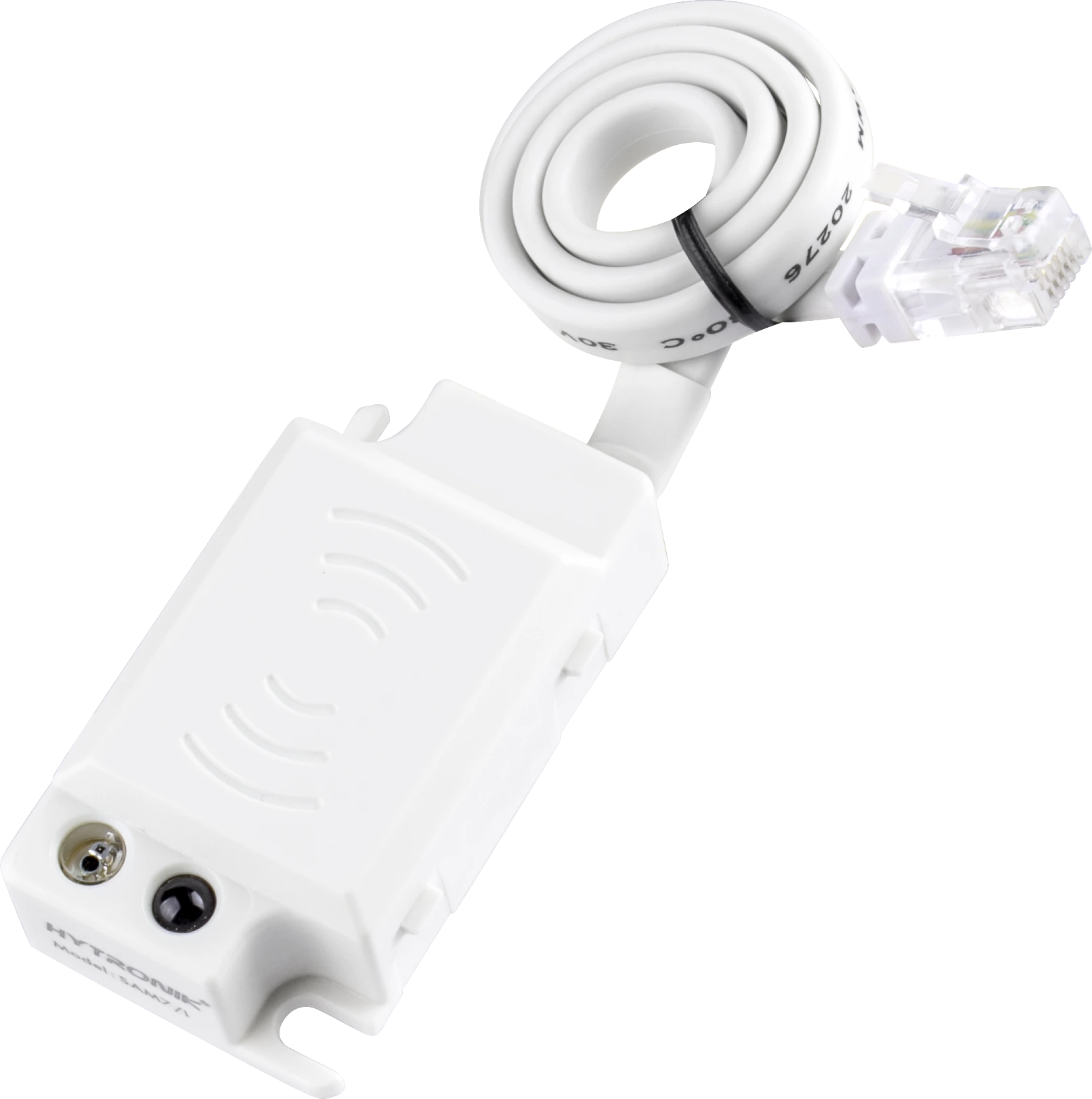
HF low-bay sensor with Photocell Advance™ and RJ12 connection to the control body.
View product
PIR low-bay sensor with Photocell Advance™ and RJ12 connection to the control body.
View product
Dedicated daylight sensor for daylight harvesting and ON/OFF control.
View productTalk to a Hytronik specialist about the fixture construction, sensor position, control behaviour and commissioning method required for your project.