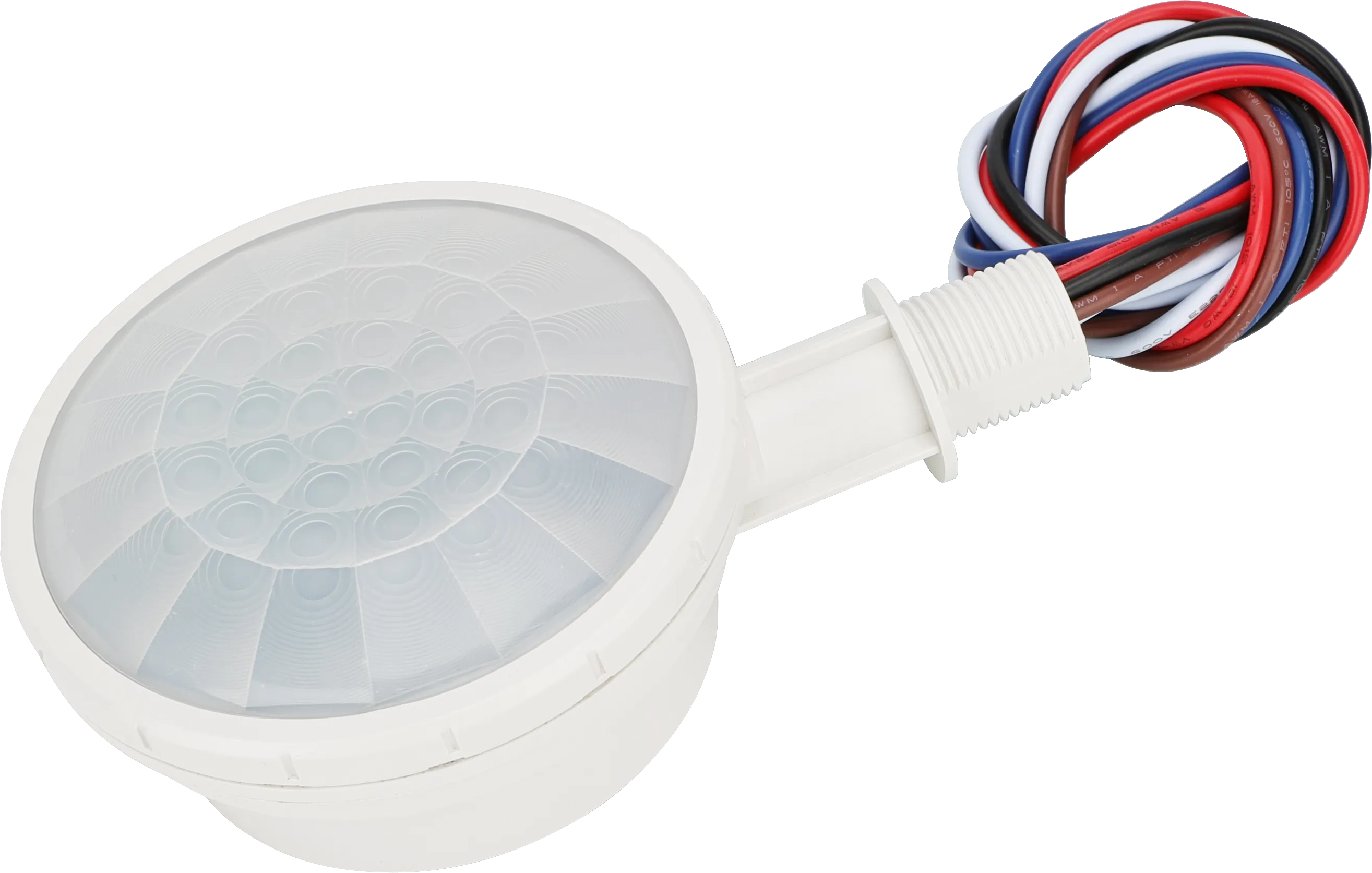

Combine the sensitivity of microwave detection with the precision of PIR in one adaptable sensor—so lighting responds when it should, and stays off when it should not.
HF can detect fine movement across a wide area. PIR precisely identifies changes in body heat. Dual-Sense™ brings both together, giving designers and installers the freedom to choose the right detection logic for each project.
ONE SENSOR LOCATION · TWO DETECTION INPUTS
Sensor location
Occupied zone
HF inputBroad, sensitive motion detection
PIR inputPrecise heat-based confirmation
Concept diagram only. Detection geometry and maximum range depend on product, lens, mounting height and sensitivity settings. Always refer to the latest product datasheet.
Technology breakdown
Different strengths. Better together.
Each technology excels in the right setting. Dual-Sense™ helps cover the conditions where a single sensing method can reach its limits.
MICROWAVE
HF detection
Highly sensitive motion sensing with broad coverage and no direct line-of-sight requirement.
Detects micro-movements
Can be concealed inside luminaires
Effective in open or obstructed spaces

PASSIVE INFRARED
PIR detection
Stable, heat-based sensing that is ideal for clearly defined zones and privacy-conscious applications.
Accurate body-heat detection
Unaffected by fans or airflow
Precise, controlled detection zones
Where single technologies reach their limits
Understand the trade-offs before choosing.
The goal is not to declare one technology better. It is to understand which environmental conditions can create unwanted triggers or missed detection.
HF considerations PIR CAN SUPPORT
Metal reflection
HF waves can reflect from metallic surfaces and extend the detection pattern.
Environmental motion
Fans, curtains or moving equipment may be interpreted as occupancy.
Cross-zone detection
Signals may pass through lightweight materials into adjacent areas.
PIR considerations HF CAN SUPPORT
Heat interference
Strong sunlight and nearby heat sources can affect infrared contrast.
Obstruction blind spots
Furniture, partitions and glass can interrupt the line of sight.
Slow movement
Small movements in cold environments may create less infrared change.
One-page quick guide
Need a faster PIR and HF comparison?
A concise one-page reference summarising how both sensing principles work, their main strengths and where each technology is most effective.