


Design Lighting Control for UK Education Estates.
Energy. Compliance. Building Data.
The technical guide M&E consultants and integrators use to specify wireless lighting control for schools, colleges and FE campuses.
Free for UK projects · PDF by email · No sales sequence unless you ask.

What you'll receive
Designing Lighting Control for UK Education
Edition 2026 · PDF by email · No sales sequence
Who this guide is for.
One guide. Written for four different people who need different things from it — all on the same project.
Four pressures hitting every UK education
estate at the same time.
Energy costs, compliance obligations, retrofit constraints and new regulation. Every M&E consultant working in education is managing all four simultaneously — and the lighting control strategy has to answer all of them.
Tightening targets, tight budgets
FE colleges and MATs targeting 50%+ carbon reductions by 2032, with no extra capital budget. Lighting offers a clear, fast-payback retrofit.
→ Lighting controls are the fastest payback retrofit.
Fragmented DALI & fluorescent stock
Under-zoned retrofits and centralised DALI block savings and make commissioning expensive. Most of it can be fixed without rewiring.
→ Most of it can be fixed without rewiring.
BS 5266-1 testing is a real cost
Manual function and duration tests cost thousands per year — and missed records create exposure under the Building Safety Act 2022.
→ Compliance can be automated.
Martyn's Law readiness
From April 2027, UK education sites need appropriate public protection procedures. Occupancy data from your lighting network supports that — without claiming to be the compliance solution.
→ Occupancy data supports, not replaces, procedures.

Three arguments. Three different budget lines.
One network. Three separate budget conversations. Each argument stands on its own — together they make approval straightforward.

Cut the load that runs every school day.
Koolmesh matches lighting output to real use — occupancy, daylight, schedules and space type — so avoidable runtime is eliminated by design, not by behaviour change.
- Empty rooms are not left fully lit
- Daylight contribution is used where available
- Sports halls and large spaces run by scene, not habit
The energy case does not depend on behaviour change. It is built into how each space operates.
Remove the manual testing burden.
Automated monthly and annual tests. Cloud compliance records. Instant alerts when a unit fails. Existing DALI emergency drivers retained — no luminaire replacement, no additional cabling.
- Monthly function + annual duration tests, automated
- Cloud-based compliance records, accessible any time
- Retrofit and new-build emergency product paths
The compliance case is about making evidence easier to find, review and hand over — not just saving labour.
Turn the lighting network into a data layer.
The same sensors that control lighting also capture occupancy, energy and emergency-test status — exposable to your BMS via BACnet/IP, without a second sensor infrastructure.
- Occupancy data from the lighting network
- Lighting state and energy visibility per zone
- Future-proof BMS integration via BACnet/IP
More value from the sensor infrastructure you already installed.
Koolmesh contributes occupancy, lighting, energy and emergency-test data via BACnet/IP where required. It does not replace the BMS or take ownership of HVAC strategy. That boundary keeps the lighting control layer clear, useful and low-risk.
Next: verified project data from Halesowen College.
Halesowen College, a Further Education campus in the West Midlands, needed to reduce lighting energy consumption, support its decarbonisation goals and modernise a fragmented campus lighting estate without disrupting academic activity.
The project was led by Uni Smart Solutions through its Eco Pulse Smart Lighting managed-service model, using Hytronik control technology and the Koolmesh wireless lighting control platform as the intelligent control layer. The system combined wireless control, occupancy detection, daylight-responsive operation, DALI/Bluetooth control, zone management and automated emergency-lighting testing.
Working block by block, installation completed each phase in under seven days. No rewiring was required in occupied classrooms. 224 existing DALI emergency drivers across all three blocks were retained and upgraded to automated self-testing via the HBEM038 converter — removing the manual testing burden at a stroke.
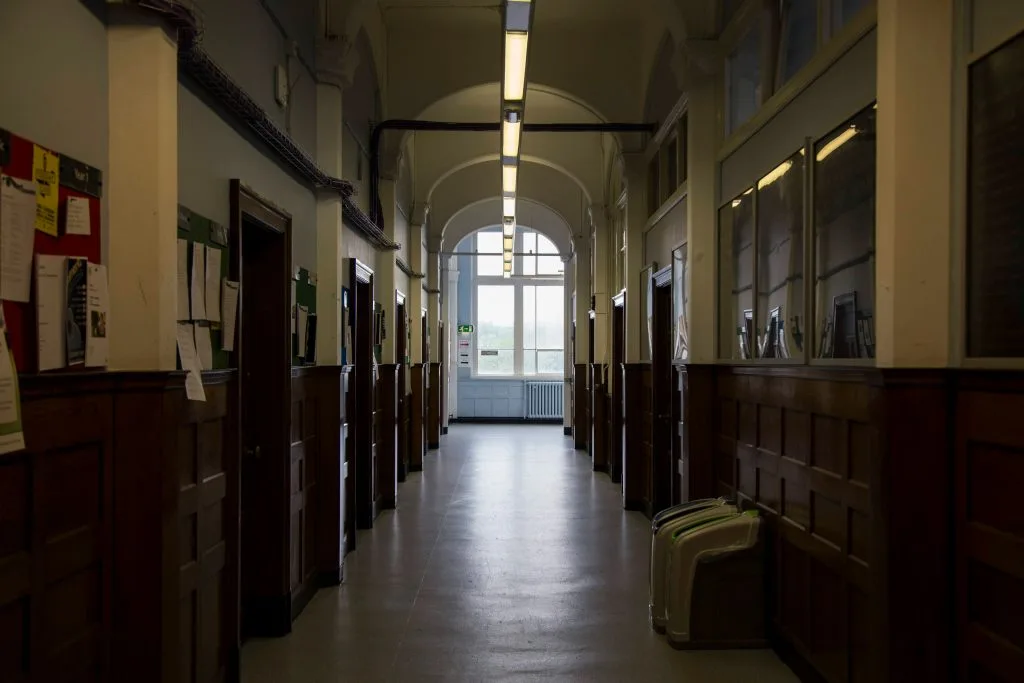
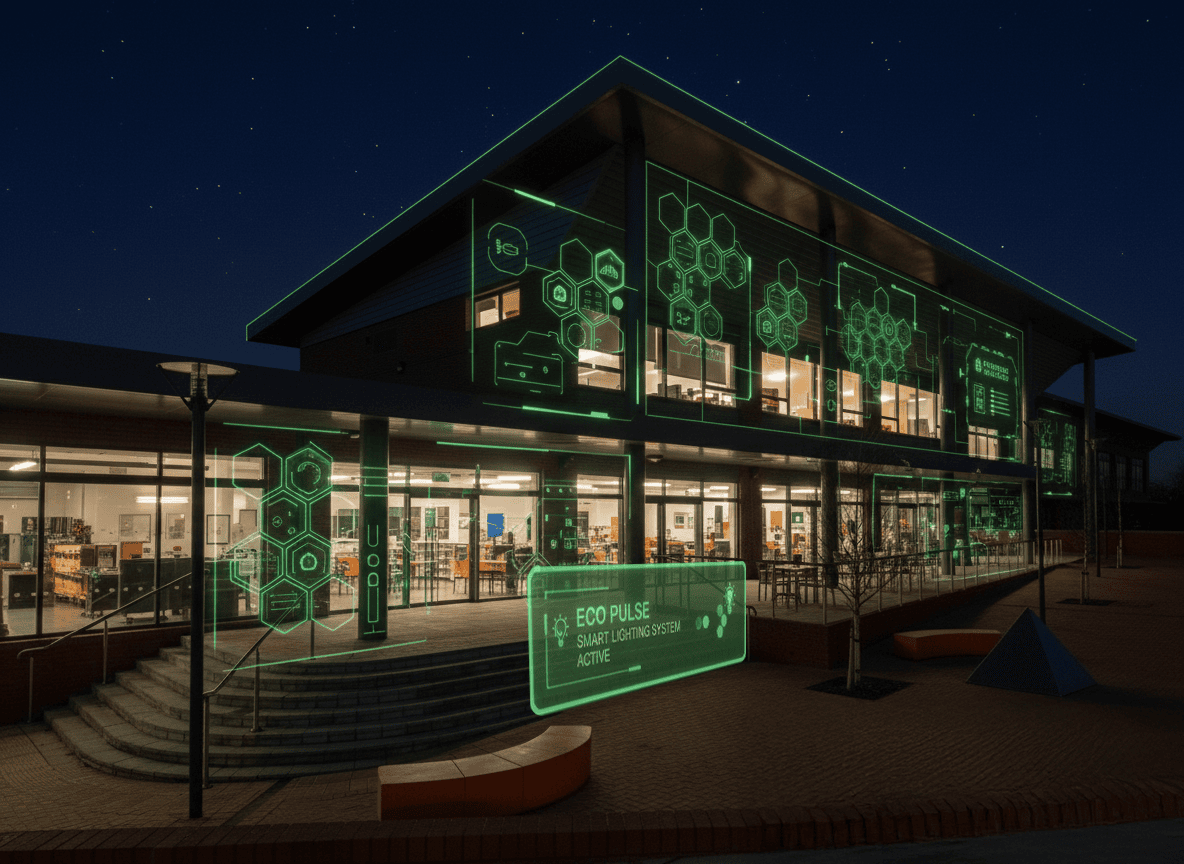
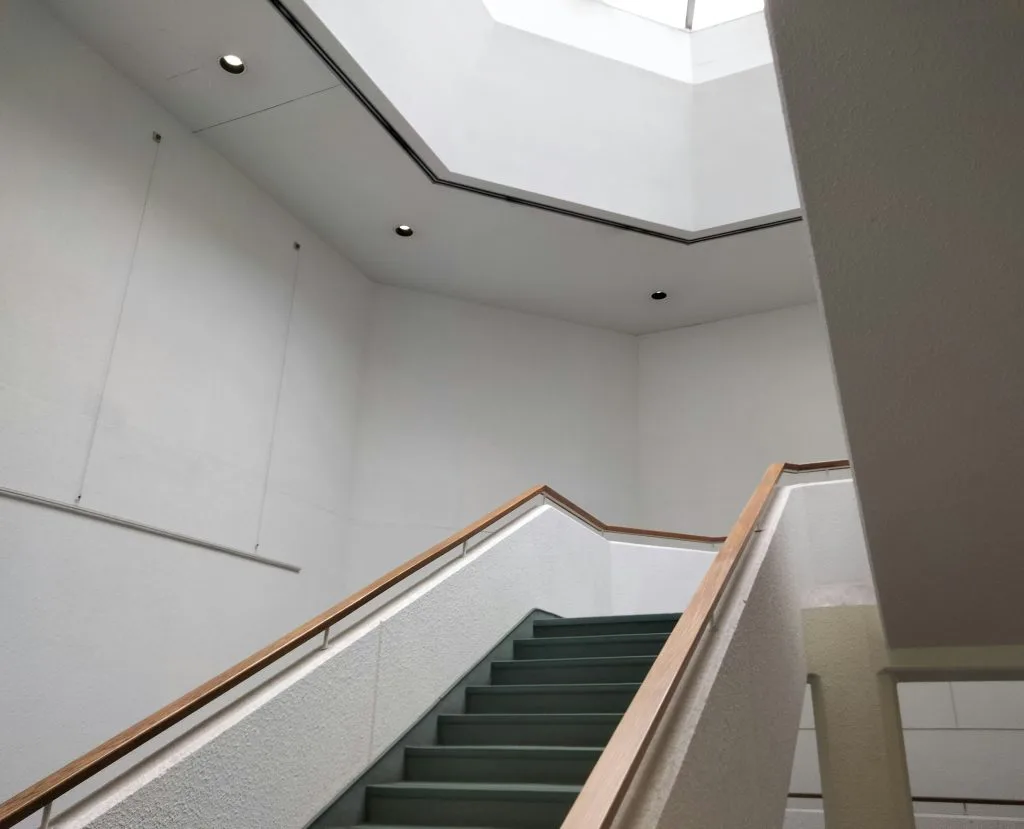
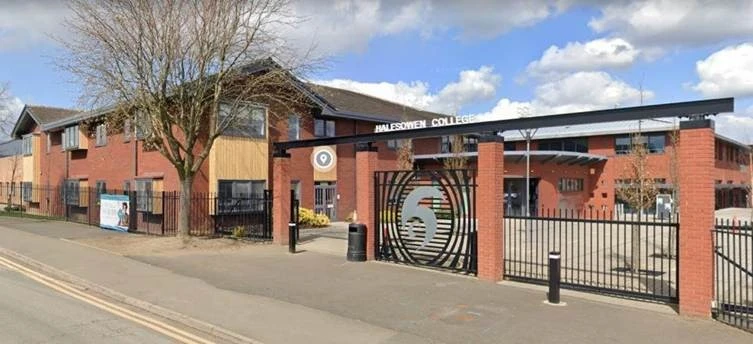
The guide explains every decision — from the architecture to the space-by-space configuration.
The right sensor in the right room.
A classroom, a corridor, a stairwell and a sports hall should not be controlled in the same way. The guide shows how to adapt the Koolmesh platform to the real occupancy patterns, ceiling heights, daylight conditions and operational needs of each space.

Standard Classrooms
Semi-automatic control for teaching spaces where user intent matters. Teachers switch lights on manually; the system switches them off automatically after absence.
- Absence-based control with configurable timeout
- Daylight linking — aperture and interior zones independently
- Teaching-row zoning for screen / AV scenes
- Manual override — kinetic or wired switch options
- Optional exam override where classrooms are used for assessments

Labs, Lecture Rooms & Specialist Spaces
Scene-based control for spaces that change task during the day: teaching, presentation, practical work, exams, cleaning or after-hours use.
- Lab and seminar room zoning
- Presentation and exam-mode scenes
- Touch-panel scene recall — no additional cabling
- Sensory-room RGBW colour control
- Conference and multi-use space scheduling

Sports Halls & Large Volumes
High-bay control for energy-intensive spaces with intermittent use, changing activity levels and strict illuminance needs at 6–9 m ceiling height.
- High-bay PIR detection at ceiling height
- PE, recreation, competition and cleaning scenes
- Match mode and exam mode where halls are used for assessments
- Optional fully wireless architecture for D4i reporting

Corridors & Stairwells
Demand-driven circulation lighting that avoids full-output operation all day while keeping routes safe and predictable at all hours.
- Follow-me corridor logic
- PIR for open corridors; HF for stairwells
- Standby dimming — day / night / cleaning modes
- Staircase master / slave grouping

External Lighting, MUGA & Car Parks
Timed-event lighting for outdoor areas, perimeter routes and sports courts where schedules, curfews and bookings drive real usage patterns.
- Timed events and curfew scenes
- Motion-triggered top-up during low-traffic periods
- MUGA booking windows for evening hire
- Car park and perimeter lighting with remote schedule updates

Emergency Luminaires (all spaces)
Automated test scheduling and digital records for emergency luminaires, with retrofit and new-build product routes explained by scenario.
- Automated monthly function tests and annual duration tests
- Cloud compliance logs — accessible any time
- Failed-unit email alerts
- Retrofit path: retain existing DALI emergency drivers with a Bluetooth/DALI emergency converter (e.g. HBEM038 / HBEM8200D/F depending on project condition)
One platform, configured differently per space. The guide shows how to adapt Koolmesh to the real occupancy patterns, ceiling heights, daylight conditions and operational needs of each space.
Turn a recurring compliance workload into a managed digital process.
Koolmesh replaces manual test execution and paper-based logging with scheduled automated self-tests, cloud-based compliance records accessible any time, and automatic email alerts the moment any unit fails.
At Halesowen, 224 existing DALI emergency drivers were retained and upgraded to automated self-testing — no luminaire replacement, no additional wiring.
The responsible person retains full review and sign-off. The automation handles scheduling, testing and logging.
Per year. Already in your budget. That is what an FE estate typically spends on manual BS 5266-1 testing labour — before the cost of missed records and the accountability requirements of the Building Safety Act 2022.
Will it fit your project?
Yes — across the typical UK education scenarios
Existing DALI emergency drivers — retained, upgraded to self-testing
New-build or full luminaire replacement
Corridor batten replacement with integrated occupancy detection
Maintained emergency exit signs and inverter-based self-test
The guide explains the product route per scenario, with UK shipping status verified.
Where required, expose lighting data to the existing BMS.
Occupancy state, lighting state, energy data and emergency-test status — exposed via BACnet/IP through the HBGW03/R gateway. For education estates, that can support space-utilisation reviews, energy reporting and future building-optimisation projects.
Koolmesh contributes data. It does not replace the BMS or own HVAC strategy. Designed for BACnet/IP integration with major BMS platforms. Final object mapping and commissioning should be agreed with the BMS team.
Specify with the numbers.
Defend with the proof.
What you'll receive
Designing Lighting Control for UK Education
Edition 2026 · hytronik.com
Practical. Decentralised. Specification-ready.
The 2026 edition of the UK Education Technical Guide includes the full Halesowen design logic, space-by-space configuration tables and copy-paste NBS-aligned specification text.
Free for UK projects · PDF by email · No sales sequence unless you ask.
Edition 2026
Published this term — first release of the UK Education guide.
Halesowen design data
Only inside the guide. Not available on the website.
NBS-aligned specification template
Editable template available on request after you read the guide.
Send me the guide.
We'll email the PDF directly. No sequences, no sales calls unless you ask.
The questions senior M&E engineers actually ask.
Yes, when designed as a mesh from the start. Every mains-powered Koolmesh node can relay within the mesh, so network density and placement are part of the design. The guide covers RF mesh planning rules for multi-building campuses. If a gateway drops, lighting keeps working — only remote access and logging are affected until it returns.
It can replace the manual execution of scheduled function and duration tests, where compatible emergency luminaires are connected and commissioned correctly. What it does not replace is the responsible person's review and sign-off — that accountability remains with your team, which is also what the Building Safety Act 2022 requires.
Via the HBGW03/R gateway over BACnet/IP. Integration details, object mapping and final BMS behaviour should be agreed with the BMS contractor. We provide the data layer; we do not claim to run your HVAC.
Yes. Commissioning uses the Koolmesh app and requires no control cabling. A competent electrician installs devices; network setup, scenes and schedules happen in-app. At Halesowen, three campus blocks were completed in under seven days per block, with work scheduled around the academic timetable.
Hybrid (HBIR32/R sensor driving a DALI bus) is the affordable starting point — it delivers all four energy mechanics without per-driver D4i data. Fully wireless (every luminaire a Koolmesh node) unlocks D4i metering for ESOS/SECR reporting. A college can mix both architectures block by block and migrate over time as drivers reach end of life.
Yes — subject to project review. The guide includes a Level 1 spec block structured by Work section / Performance / Products / Installation / Commissioning, with Uniclass 2015 codes. A full editable Level 2 template is available on a second request.